How to Choose Area Rugs for Hardwood Floors
Aug 06, 2026 | Carpet One Floor & Home
Hardwood floors bring warmth and character to a home, but they also need a little help staying that way. The right area rug can protect your floors from scratches, add comfort underfoot, and tie a room together, but only if you choose the right size, material, and placement. As your trusted flooring partner, we're here to help you sort through the options so you can shop with confidence. Read on to explore how to pick the best area rugs for hardwood floors in every room of your home.
Should You Put Area Rugs on Hardwood Floors?
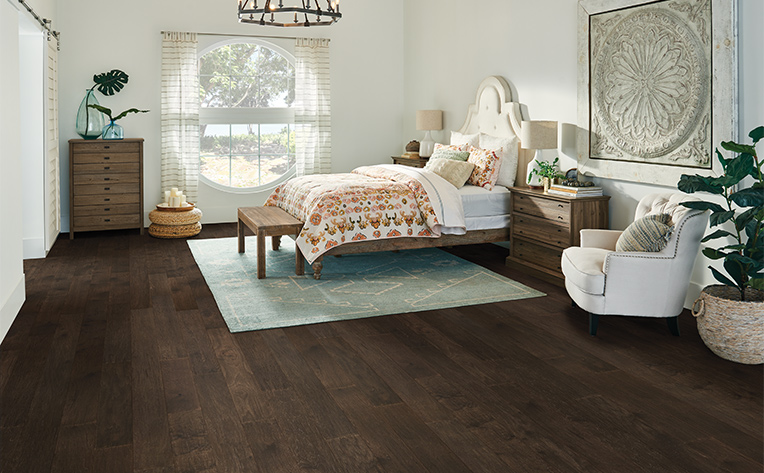
Yes, and it's one of the easiest ways to protect a hardwood floor while making a room feel finished. Area rugs create a buffer between daily foot traffic and your floor's finish, which helps guard against scratches, scuffs, and everyday wear. They also add sound absorption, since hardwood can feel a little echoey on its own, and they bring in color, pattern, and texture that wood alone can't offer. The key is choosing a rug that works with your hardwood rather than against it, which comes down to material, size, and placement.
What to Look for in a Rug for Hardwood Floors
Not every rug material is a good match for hardwood. Some options are naturally gentler on wood floors, while others can trap grit or hold moisture in ways that lead to damage over time. Here's what tends to work best.
Wool is one of the most popular choices for hardwood floors, and for good reason. It's durable, naturally soft underfoot, and resistant to dust and stains, which makes it a strong option for living rooms and other spaces that see regular use. A wool rug can handle years of daily life while still looking good.
Natural fiber rugs, like those made from jute or sisal, bring a relaxed, textured look and hold up well in busy areas of the home. They pair nicely with the natural grain of hardwood and tend to be easy to keep clean with regular vacuuming.
Flatweave rugs are worth considering if you want something thin, lightweight, and easy to move. Because they sit low to the ground, flatweave styles are less likely to bunch up or create a tripping hazard, which makes them a smart pick for hallways, entryways, and other high-traffic areas.
Steer clear of rugs with plastic or PVC backing. These backings can trap moisture against your floor's finish and may lead to discoloration over time. If a rug catches your eye but has a backing you're unsure about, pairing it with the right rug pad can help close the gap.
Pro Tip: If you're placing a rug near a sink or stove, look for a low-pile, easy-clean option that can handle spills without holding onto moisture.
How to Size an Area Rug for Hardwood Floors
Area rug size is where a lot of people get stuck, and it's one of the most common questions we hear. The general rule is to size up rather than down. A rug that's too small can make a room feel disconnected, while a properly sized rug anchors your furniture and makes the whole space feel intentional. Here's how that plays out room by room.
Living Room
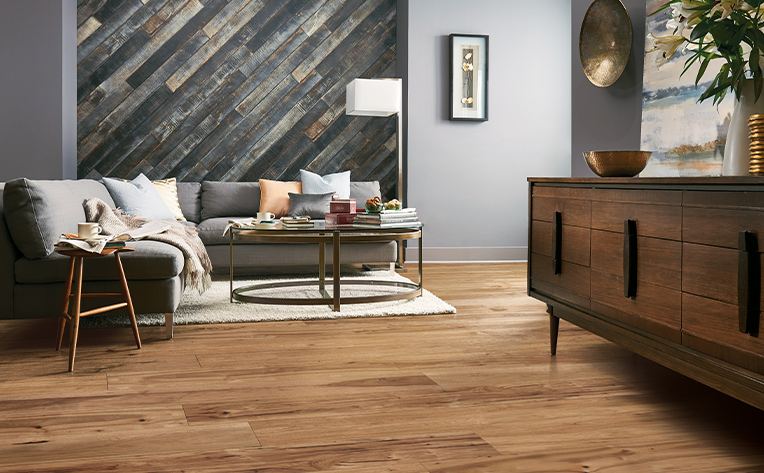
In a living room, your rug should be large enough to anchor the seating area. At a minimum, the front legs of your sofa and chairs should rest on the rug. For a more pulled-together look, size up so all the furniture legs sit on it. A good guideline is to leave about 6 to 18 inches of bare hardwood visible between the rug's edge and the walls. That frame of exposed wood keeps the room from feeling boxed in while still letting the rug do its job.
Dining Room
Dining rooms can require a bit more math. You want the rug to extend far enough beyond the table that chairs stay on the rug even when they're pulled out. A common approach is to add roughly 24 to 30 inches to each side of your table's dimensions. This keeps chair legs from catching on the rug's edge and gives the whole table setting a finished look.
Bedroom
In the bedroom, a rug that extends 18 to 24 inches beyond the sides and foot of the bed creates a soft, unified look and gives you a comfortable spot to land when you get out of bed. If a full-size rug feels like too much for the space, two smaller runners placed on either side of the bed work well too.
Pro Tip: As a quick point of reference, an 8x10 or 9x12 rug fits most standard living rooms comfortably, while a smaller room might call for something closer to 5x8 or 6x9. If you're deciding between two sizes, it's usually better to size up than to end up with a rug that floats awkwardly in the middle of the room.
Wondering how a certain size will actually look in your space? Try our innovative Room Visualizer tool to see different rug sizes and styles come to life in a room just like yours before you decide. Simply upload a photo and get a real feel for how the rug sits with your existing furniture, all before you bring anything home.
Where to Place an Area Rug in Each Room
Sizing and placement go hand in hand. Here's a few helpful tips for each room:
- In the living room, center the rug under your coffee table and let your seating group frame it, whether that means just the front legs resting on the rug or the whole arrangement sitting on top.
- In the dining room, center the rug under the table so it extends evenly on all sides.
- In bedrooms, most people place the rug so it extends from roughly the midpoint of the bed toward the foot, though placing it fully under the bed works well too if the size allows.
For hallways and other high-traffic areas, a runner is often the better choice over a full area rug. Runners protect the parts of your hardwood floor that see the most wear, like the path between rooms, without overwhelming a narrow space.
Protecting Your Hardwood Floor with a Rug Pad
Even the best rug can cause problems if it's placed directly on hardwood without the right support underneath. A rug pad is one of the simplest ways to protect your floor and get more life out of your rug at the same time.
Look for a rug pad with a non-slip surface, since this keeps the rug from shifting underfoot and reduces the risk of trips. Felt and natural rubber pads tend to be gentle choices for hardwood, offering grip and light cushioning without leaving residue behind.
Avoid pads with PVC or latex backing, as these can react with some floor finishes and lead to discoloration over time. If you're ever unsure whether a specific pad is safe for your floor, a small test in a hidden corner is an easy way to check before committing to the whole room.
A rug pad also helps a rug lay flat right from the start. If you've unrolled a new rug and it won't sit level, a quality pad usually solves the problem within a few days as the fibers relax. Weighing down stubborn corners with books or furniture for a day or two can help speed things along.
Simple Maintenance Tips to Keep Your Space Looking Great
A little routine care goes a long way toward keeping your rug and your hardwood floor in good shape:
- Rotate your rug periodically. Sunlight and foot traffic wear unevenly, so turning your rug every few months helps it age consistently instead of fading or flattening in just one spot.
- Clean underneath, not just on top. Dust and grit that collect beneath a rug can act like sandpaper against your hardwood over time. Lifting the rug for a quick sweep or vacuum every so often protects the finish underneath.
- Manage sun exposure. If a rug sits in a sunny spot for months at a time, you may notice a difference in color between the covered and uncovered floor once you move it. Curtains, blinds, or simply rotating the rug can help keep your hardwood looking uniform.
- Vacuum regularly. Keeping the rug itself clean prevents dirt from working its way down to the floor, which protects both surfaces at once.
Bring the Right Rug Home for Your Floors
Choosing the right area rug for your hardwood floors comes down to a few simple decisions: pick a material that fits how you live, size it to fit your room and furniture, and give it the right support underneath. Get those three things right, and your rug will protect your floors while making the room feel exactly the way you want it to.
Not sure where to start, or want a second opinion on what will work best in your space? Our flooring experts can help you narrow down the best material, size, and placement for your exact space, so you get it right the first time. Don't wait to reach out today and connect with a flooring specialist to get personalized guidance built around your home.